
- by Mohammed Abdul Rahman Baharoon ,
- Wednesday, 28th January, 2026
Power, in geopolitical terms has been connected to means of coercion, be it hard or soft, military or economic. Power has been the currency of empires, and enabler of expansion and growth. Across history expansion was equal to military might. Empires expanded as they created new types of weapons from the metallurgy that created bronze weapons to chemistry that created gunpowder and the physics that created the Atomic Bomb.
But what if expansion can be achieved without might? What if the means of growth is to be coveted not coerced?
This is possibly why the United States see China as its long term strategic competitor not Russia, though the later owns 14 times the amount of nuclear warhead China owns, has 1.78 times the land area and almost 3 times the water area with a geography extending in two continents.
China’s power can simply be described in terms of “economy” but it is more accurately “relevance”.
Looking only at household China relevant to the world. It produces 56% of the world’s home appliances and almost 90% of the worlds TV as well as 53% of the world’s mobile phones and produces approximately 25% of the world’s total food.
This is a new Paradigm of power, where relevance to the world is what really counts not size or military might.
This is paradigm the UAE is applying in its global connectivity agenda. The UAE relevance to the world is not based on its size but its relevance to interest of others.
This can be easily seen in the relevance of companies like DP World which is a core pillars of the global supply chain as it moves 10% of the global containers traffic. In financial sector, Dubai Financial Market is ranked 16th globally ahead of markets like Zurich, Beijing and Tokyo. In air traffic UAE airspace handled 1 million air traffic movement in 2024 where more than 160 countries use its airspace, that is relevance to more than 82% of the total countries of the world.
We are reminded, every now and then, that the classical terms of power will need to reassert itself, using size or readiness to use military power as tools which brings back to the foreground concepts like National Security, redlines and military alliances.
However, that very clinging to old manifestations of power will reduce “relevance” and will limit the possibility of expansion beyond geography.
As China rises in its relevance and Russia discovers the limits of its military power there will be a revision to the paradigm of military power versus economic relevance.
click HERE to read
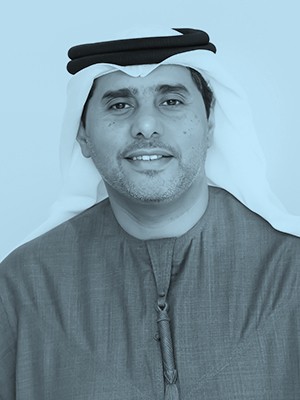
Mohammed Abdul Rahman Baharoon
Director General
Read More
Areas of Expertise
- Geo-strategy
- Reputation and soft power
- Public Policy and International Relations
Education
- Master’s degree in English Literature from Texas Tech University in 1995
- English Major from Kuwait University in 1987
Bio
He perused a career in media as a reporter for “Al Arabi” Magazine, Al Ittihad newspaper, and then Editor for Gulf Defense Magazine before starting as director of research at both and focusing on the interplay between Geostrategy and policymaking in governance, stability, capacity building, and future-proofing.
Mohammed has also worked as Deputy Director of Watani (UAE’s first initiative on National Identity) and is also a founding member of the board of “Bussola Institute” a think tank in Brussels that focuses on the changing and emerging aspects of the partnership between the EU and the GCC member states.
As part of his interest in the emerging geostrategic space of the Arabian Peninsula, Mohammed looks at Iran as part of the development of the area as a major trade artery. This development implies developing a sustainable relationship with its regional neighborhood on the Arabian Gulf, The Arabian Sea, the Red Sea, or the Mediterranean. Iran is a major component of that space and becoming more adaptable to the modernization process will allow it to become part of the future development of the region.