

The U.S–Iran War: The Gulf at the Heart of a Pressure Race and Open-Ended Scenarios
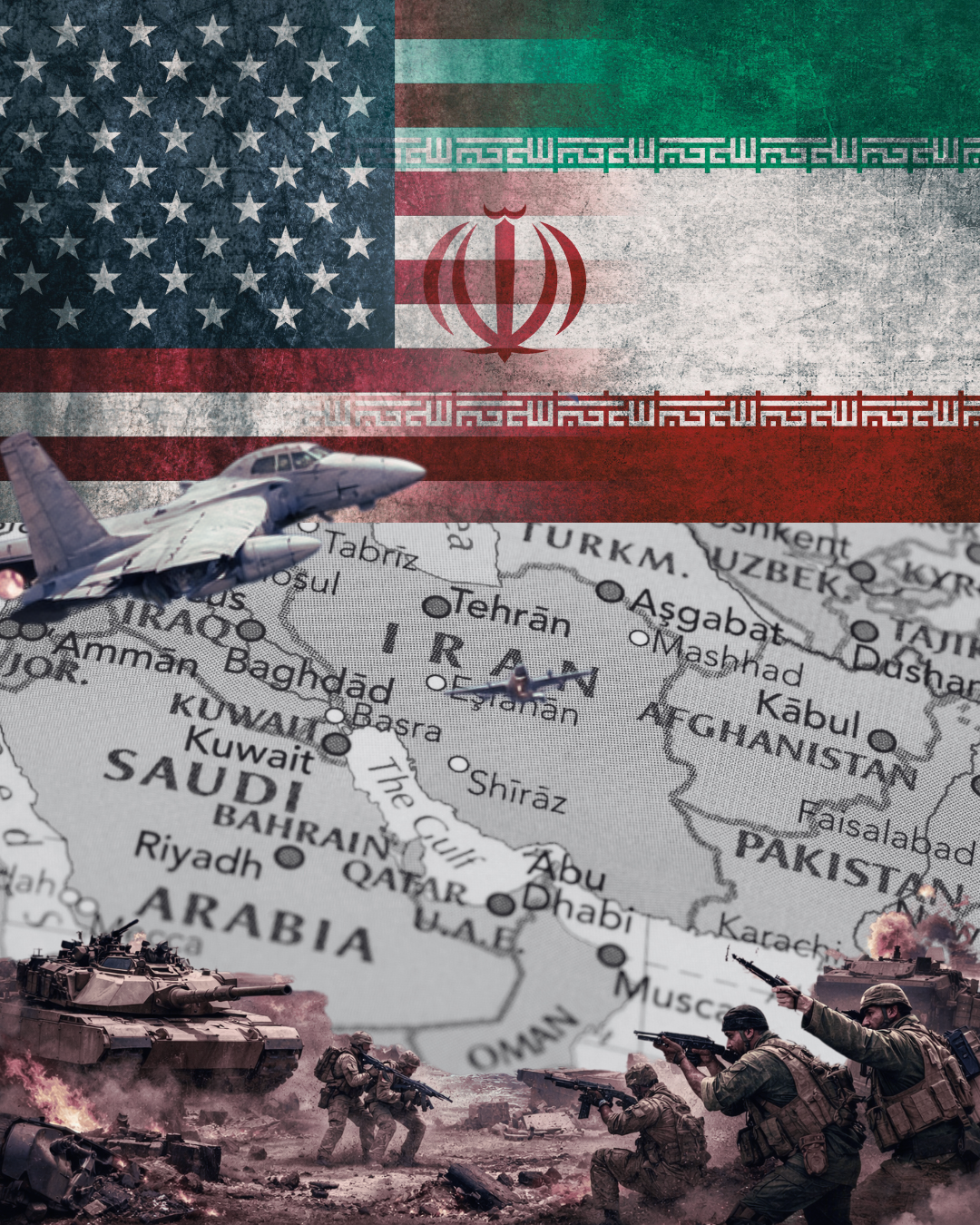
The continuation of U.S-Israeli strikes on Iran, and Tehran’s retaliatory attacks against Gulf Arab states for a full week, raises a central question: how long can this model of warfare persist without sliding into a broader war of attrition that degrades both military capabilities and economic resilience...
- by Rasha Al Joundy ,
- Saturday, 7th March, 2026
The continuation of U.S-Israeli strikes on Iran, and Tehran’s retaliatory attacks against Gulf Arab states for a full week, raises a central question: how long can this model of warfare persist without sliding into a broader war of attrition that degrades both military capabilities and economic resilience. Iran’s shrinking inventory of launch platforms and the wider constraints on precision-guided munitions are not merely technical variables; they point to the time horizon of any sustained, high-tempo air campaign. At the same time, the political and economic costs of this confrontation extend well beyond the direct belligerents. Energy markets are operating within a narrow band of stability, and the global economy has yet to close the chapters of post-pandemic disruption and the cumulative shocks from successive wars, from Ukraine to Gaza. Each additional day of escalation therefore adds a risk premium that translates into higher prices, shipping and insurance costs, and more cautious investment decisions.
Against this backdrop, understanding Washington’s approach, and Tehran’s assessment of the stakes becomes essential to explaining why the Gulf has become a primary arena in the equation. The Gulf sits at the core of the geography through which energy and trade flow, and it functions as a critical financial and logistics bridge between East and West. It is therefore unsurprising that the conflict is being prosecuted in close proximity to Gulf states, using instruments that touch them directly.
Washington’s Compass: From Deterrence to Reengineering
President Donald Trump once positioned himself as the candidate of economic prosperity and an end to wars, even signaling his ambition for a Nobel Peace Prize. Yet when he rebranded the U.S. Department of Defense as a “Department of War” and waged a tariff campaign to impose U.S. interests, the message was clear: his administration’s compass shifted toward coercive power, economically and militarily. The underlying proposition is straightforward “what cannot be secured through diplomacy will be secured through force”. That message, however, was not absorbed in Tehran during negotiations, and it still appears insufficiently internalized today.
It is also unrealistic to reduce U.S. objectives to “zero enrichment” What appears to be on the table is a broader package: capping enrichment at defined levels, removing sensitive uranium stockpiles from Iranian territory, constraining the missile program that enables persistent regional coercion, and terminating support for proxy networks that threaten maritime corridors and target the Gulf and Israeli depth. Put more precisely, Washington is seeking to redefine the limits of Iranian power so that it cannot be converted into durable hostile influence.
This logic is evident in the targeting pattern: the strikes have focused heavily on Iran’s security and military nodes, suggesting an effort to paralyze operational decisionmaking, reduce the prospects of complex retaliation, and weaken effective command and control structures. At the same time, keeping senior executive and diplomatic figures who can communicate, such as President Masoud Pezeshkian and Foreign Minister Abbas Araghchi signals that Washington is not closing the door to a settlement. Rather, it is seeking a settlement on its terms, with actors it views as “negotiable” rather than “obstructionist.” This is the rationale for pressure before talks: the campaign will not pause before Tehran acknowledges the substance of the concessions being demanded.
The economic dimension is not ancillary to the military campaign; it is integral to it. A key U.S. objective concerns Washington’s ability to shape future investment and presence in Iran’s energy sector and to ensure continued oil sales in dollars, preventing any serious shift toward alternative payment architectures, whether in yuan, rupees, or other currencies that could erode dollar primacy in the global financial system. From Washington’s perspective, this requires a decisive break with Iran’s entrenched hostility toward the West, not half-measures.
Some analysts have even drawn historical analogies to the transformation of U.S-Japan relations before and after World War II as a model for what a post-war U.S-Iran relationship could resemble. Such a trajectory would almost certainly face resistance from the current Iranian system, but the comparison is nonetheless present in some readings of U.S. history.
The GCC in the War Equation
For the Gulf Cooperation Council states, the war presents unusually complex dilemmas. Despite deep security disputes since the founding of the Islamic Republic, Gulf states have repeatedly sought, at various phases to normalize relations with Iran, a large state of nearly 100 million people with substantial economic potential. This reflects a broader regional trend, particularly over the past decade, in which geoeconomic priorities have increasingly displaced efforts to resist the ideological projects advanced by political Islam in both its Sunni and Shiite forms.
Yet at the moment Iran returned to a posture of direct coercion by targeting Gulf states, especially the United Arab Emirates, as a hub connecting global financial and economic systems and a logistics success story linking East and West, The UAE effectively started a de-escalation pathway with Iran that was meant to help prevent precisely such military collisions. In doing so, Tehran opted to entrench the image of itself as a threat rather than a partner. This approach began with Iran’s response to U.S-Israeli attacks during the “twelve-day war” when it targeted Qatar a state that had played a significant role in mediating with Washington in support of negotiations facilitated by Oman.
The result is an acute GCC challenge: how to preserve a defensive posture and maintain the Gulf’s role as a strategic economic actor for the world without becoming a theater of targeting or a lever for coercion against the global economy, and without being pushed into overt military alignment in a war that Gulf states worked hard to avert.
This dilemma becomes even more sensitive when targeting shifts from signaling to direct threats against economic infrastructure: energy facilities, ports, airports, and logistics nodes. An attack on a Gulf economic hub is not merely about disabling a specific site, it is also about striking at the region’s broader model one that has increasingly moved from conflict logic to connectivity and integration. In this sense, the UAE’s particular exposure as a financial and commercial connectivity point, carries political meaning as much as it reflects military intent, which is undermining confidence in supply chains produces effects that spill across borders and persist beyond the immediate moment, reshaping future calculations.
Within this context, escalatory diplomatic decisions, such as the UAE’s withdrawal of its mission and closure of its embassy in Tehran can be read as the practical translation of a new equation in which sovereignty and internal security considerations move ahead of economic openness. Qatar’s experience also underscores that mediation, cooperation, and channels of communication are no longer sufficient guarantees against threat suggesting that Tehran has chosen to consolidate the threat image rather than invest in the trust that had been built to prevent war.
Given Iran’s continued strategy of using geography to structure its retaliation, the Gulf is likely to retain a heightened threat perception for a prolonged period even if the war ends with the Iranian system remaining intact and even if no Gulf state participates militarily in the U.S-Israeli campaign despite efforts to draw them in. The core question will remain: will Iran again target Gulf states in any future confrontation?, given that the Gulf’s strategic importance to the world economy is structural and enduring rooted in geography, wealth, infrastructure, and opportunity.
End of the War or the End?
The current war, and Iran’s aggression against Gulf states, places the region’s governments in the middle of a high-stakes environment that could evolve into something similar to the long counterterrorism-style wars, an extended confrontation with open-ended scenarios. Such a trajectory would threaten economic and security stability far beyond the Middle East or Asia, spilling globally and driving Gulf states into a more intense confrontation with Iran one that would move from pressure signaling to more direct warfare.
The alternative is a strategy of shock absorption and sustained defense, but the viability of that approach depends on how long the war lasts. The conflict has already drawn positions and decisions from European states, as well as China, India, and Pakistan particularly as Iran targets energy-sector assets and attempts to disrupt the Strait of Hormuz, while the Houthis threaten to enter the fight, raising risks to the Red Sea and Bab al-Mandab and opening the possibility of Houthi strikes against Gulf states. Moreover, the spillover footprint has widened to include Cyprus, Azerbaijan, and Turkey.
In a harsh way, the globalization of the war’s economic effects has reasserted the Gulf’s strategic centrality. It also suggests that the window available to Iran’s leadership to find an exit is narrowing quickly, before reaching a point of no return one that would not produce a negotiated end to the war, but rather an open-ended scenarios with multiple, potentially destabilizing outcomes.

Rasha Al Joundy
Research Supervisor
Read More
Areas of Expertise
- Expert in the Gulf region politics,
- Security and internal affairs and has been working on the GCC region since 2011.
Education
- Master’s degree in International Relations and World Order at Leicester University (UK 2016).
- Graduated from the Faculty of Law – University of Damascus in Syria in 2006
Bio
completed her master’s degree in International Relations and World Order at Leicester University (UK 2016). She graduated from the Faculty of Law – University of Damascus in Syria in 2006, and trained as a lawyer to register at Damascus bar association. She is an expert in the Gulf region politics, security and internal affairs and has been working on this region since 2011. Rasha Currently work as a senior researcher for Gulf affairs and supervise the training program at Dubai Pubic Policy Research Centre.