

- by Rasha Al Joundy ,
- Sunday, 5th April, 2026
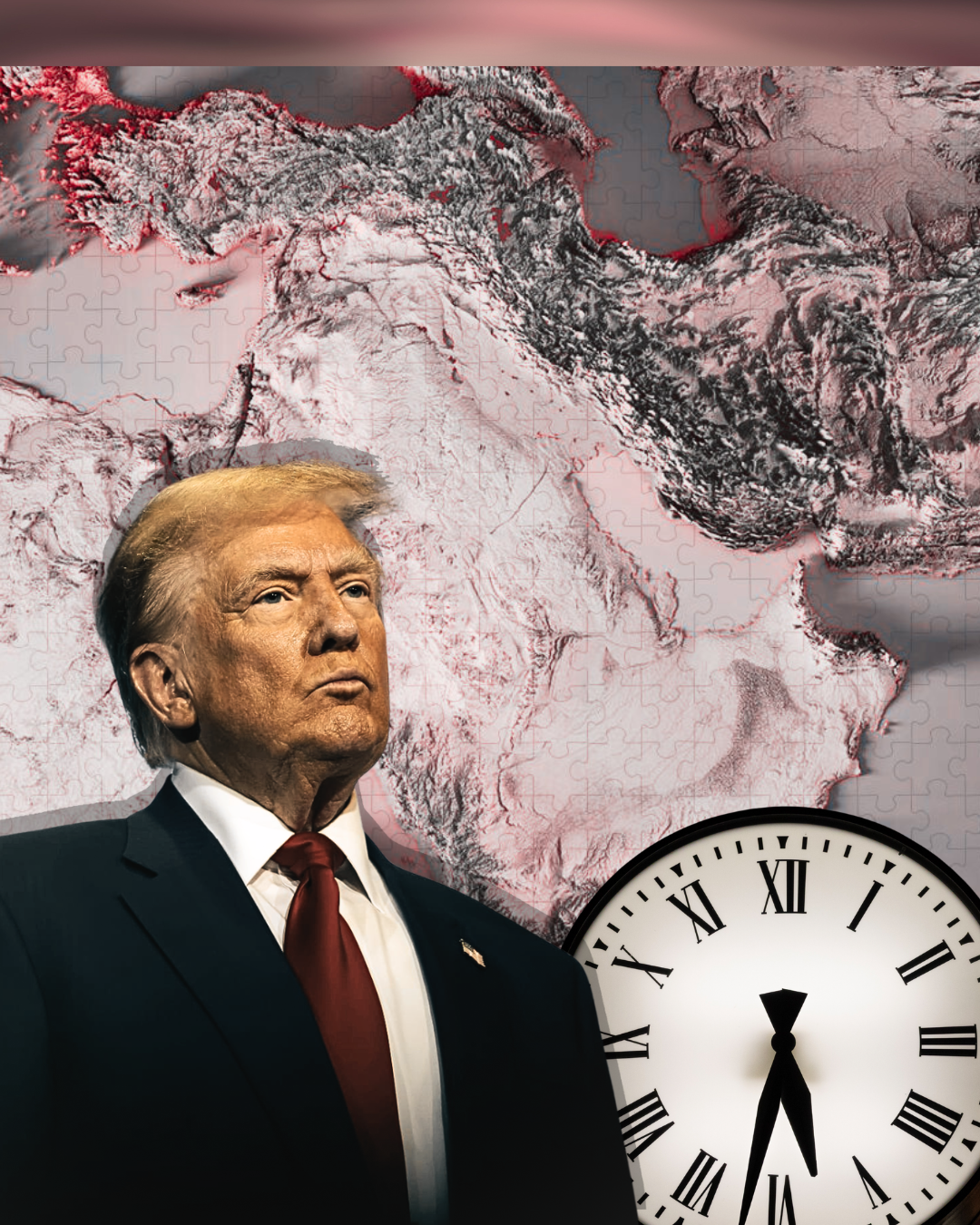
Since the start of U.S. and Israeli military operations against Iran, the key question has been the war’s political end-state. Washington’s public messaging has been deliberately fluid, and at times contradictory. At one stage, the objective was framed as regime change in Iran and support for the Iranian people in removing their oppressors. Later, the message shifted toward claiming that the operation had already produced meaningful change inside the ruling structure and had therefore achieved its purpose. Yet the killing of several senior officials, however consequential, is not in itself equivalent to regime change in Iran.
At the same time, the apparent preference for dealing with figures from within the existing system reflects a desire to avoid an Iraq-style outcome, in which the dismantling of the army and state institutions after Saddam Hussein’s fall drove many of the displaced and aggrieved toward al-Qaeda. No state in the region has an interest in confronting the consequences of Iranian state collapse or fragmentation.
The U.S. Predicament
The U.S. administration appears to have operated on assessments that underestimated how deeply the regional economic theater affects both the global economy and the United States itself. It may have assumed that a heavy military campaign would bring down a regime already weakened by sanctions and further damaged militarily by the twelve-day war. That calculation has not held.
Washington may also have expected that European states would fall in behind the campaign in defense of their own interests, particularly the stability of maritime transit routes and the weakening of a regime that had helped Europe’s adversary, Russia, in its war against Ukraine. Yet the earlier strain in transatlantic relations, including the Greenland dispute, even if later softened, and the use of tariffs as an instrument of pressure, appears to have contributed to Europe’s reluctance to answer Washington’s call. That hesitation is likely to carry costs for Europe as well, not only for the U.S. agenda.
The initial assumptions were therefore flawed. The war is now feeding directly into the U.S. domestic political climate. After a period in which the administration had benefited from favorable economic indicators, from lower energy prices to lower interest rates, the war has reopened scrutiny of those gains and introduced new pressure on political and military decisionmaking. Republicans are also mindful that Democrats could use the economic consequences of the war to improve their prospects in the midterm elections.
This leaves Washington facing a difficult choice. Its European allies are unwilling to help increase pressure on Iran in order to force open the Strait of Hormuz. One option is a rapid exit through a cosmetic agreement, one that may temporarily halt the confrontation but leave the door open to renewed war, while preserving the economic fallout for both the United States and the wider world and creating space for China in a region long associated with the Western strategic camp. The other option is continued military action, potentially leading to a ground intervention, whether on Khark Island or at other strategic sites inside Iran. Recent rhetoric suggests that the escalatory path is gaining momentum.
Iran’s strategic Dilemma
Iran, for its part, is confronting an expanding military campaign whose targets are no longer confined to missile, drone, and weapons production sites, including underground facilities. The target set is now reaching into the economic sphere as well, including steel plants and the bridge linking Tehran and Karaj. The U.S. president’s threat to send Iran “back to the Stone Age” points to a further danger: civilian infrastructure may increasingly come into the crosshairs if Tehran concludes during the current mediation phase that it has gained a position of relative advantage over Washington. Several regional and international actors are involved in those mediation efforts, most recently through China’s announcement of a joint Chinese-Pakistani initiative calling for an immediate ceasefire and a transition to negotiations.
Iran also faces a second problem: a clear misjudgment of how destructive this war could become. That is evident in the escalatory tone of official Iranian statements and in the lack of meaningful cooperation with the ongoing Pakistan-backed mediation track. That process should be used to stop a war that is imposing severe costs on Iranian society, including on the regime itself, which has already lost a significant number of senior officials. If the war continues, its consequences could become existential.
The language emerging from Iranian officials and official media platforms suggests continued adherence to the same approach that helped produce the war in the first place: downplaying the damage, declaring victory, rejecting compromise, and seeking to convert the conflict into illegitimate strategic gains. This is especially clear in the insistence on control over the Strait of Hormuz and the attempt to frame that control in terms of “sovereignty” over the waterway. Iranian messaging has also emphasized Tehran’s wartime dominance over the maritime corridor through the disruption of shipping and decisions over whether transit is allowed, while implying that such dominance should outlast the war itself.
That outcome would be unacceptable to every regional party, because it would effectively reward Iran with rights it does not lawfully possess. The same concern applies to former foreign minister Javad Zarif’s argument that Iran is currently winning and should now harvest the gains of that victory. This is problematic in itself because it offers a distorted reading of events and advances a one-sided vision of regional security and of how the war’s aftermath should be managed.
Zarif also argued, in language closer to political schadenfreude than diplomacy, that the Gulf states’ partnership with the United States had failed to protect the region. His remarks contained no apology to neighboring states that were directly targeted. They also rested on the assumption that Gulf states have no real say in determining how the war ends, while proposing a bilateral nonaggression agreement with Washington rather than a multilateral framework that includes the states that were attacked. Just as importantly, this line of argument ignores Israel, even though Israel has now initiated war against Iran twice. Any outcome that does not address the Iran-Israel track will therefore fail to end the conflict in any durable sense, regardless of whatever arrangement may be reached between Tehran and Washington.
Gulf Intersts Cannot Be Bypassed
For the Gulf states, the war has exposed two interrelated dilemmas. The first is a U.S. miscalculation: Washington appears to have entered the conflict on the assumption that military pressure could either bring down the Iranian regime or compel Tehran to accept terms it had already rejected in previous rounds of negotiation. The second is Iran’s inflated sense of victory, which is hardening its position even on the terms of a ceasefire and encouraging demands that are neither realistic nor acceptable, among them recognition of Iranian “sovereignty” over the Strait of Hormuz, treating a halt to attacks on shipping as a concession to be traded for ending the war, and pursuing sanctions relief without meaningful guarantees against renewed aggression toward Gulf states.
Such propositions are untenable because they disregard the agency, rights, and security interests of the states most directly affected by the conflict. Any postwar formula built on that logic would not only bypass Gulf interests; it would fail to produce a sustainable regional outcome.
From the outset, Gulf states responded on the diplomatic front through multilateral institutions and the instruments of international law. They mobilized support for Security Council Resolution 2817, which condemned the Iranian attacks and called for their immediate cessation, as well as for a Human Rights Council resolution condemning the targeting of civilians and civilian infrastructure as a grave violation of international law. These steps are not merely declaratory. They are part of shaping the legal and political terrain of the postwar phase, including future claims for accountability and compensation for the damage caused by Iranian attacks.
The UAE has articulated this approach with particular clarity. Emirati officials have consistently described the attacks as terrorist in character and have stressed that any durable endgame must rest on deterrence, accountability, and the denial of wartime gains. In that context, Khalifa Shaheen al-Marar called for support for recourse to the Security Council under Chapter VII to prevent Iran from closing or threatening the Strait of Hormuz, rejected Iran’s blackmail of the region, and argued that Tehran must bear the consequences of its aggression as an essential element of deterrence.
This has become a consistent line in official Emirati messaging: any credible end-state to the war must include three elements. Iran must be deterred from repeating attacks against Gulf states; it must be held responsible for the damage its aggression inflicted on Gulf populations and Gulf economies; and it must not be permitted to convert military escalation into illegitimate political gains at the expense of Gulf rights and interests.
The Gulf Decisionmaking
This is where Gulf decisionmaking acquires particular significance. The Gulf states possess the legal, economic, and geostrategic tools needed not only to manage the immediate effects of the war, but also to shape the terms of any negotiation over its outcome. They sit at the center of global energy production and infrastructure, border the region’s most consequential maritime corridors, and cannot be treated as marginal actors in any discussion between Washington and Tehran over ceasefire terms, deterrence arrangements, or the broader political framework that will follow the conflict.
From a Gulf perspective, any credible diplomatic outcome would need to rest on several conditions. First, it would require recognition of the strategic importance of Arab and Gulf coordination in defining the future regional order. Second, it would require a change in Iranian political discourse away from arrogance and hegemonic signaling toward a language of respect, acknowledgment, and confidence-building. Third, it would require a regional nonaggression framework rather than a narrow U.S.-Iran bilateral arrangement that would implicitly legitimize Iranian primacy in the Gulf after the war. Fourth, it would require negotiations over the military capabilities that have become central to the conflict, particularly the distinction between defensive capabilities and the offensive systems, especially missiles and drones used to threaten civilians and infrastructure in Gulf states. Finally, it would require a regional understanding on maritime security in the Strait of Hormuz based on the participation of all littoral states, potentially with support from other interested actors, and formalized through a clearly articulated collective framework.
To be sure, the United States has previously shown that it can negotiate with Iran without meaningful Gulf participation, as in the Obama-era nuclear talks, and it can initiate or halt military action without Gulf approval. But durability is a different question. If Iran is seeking a stable and politically sustainable outcome in any future agreement with Washington, it cannot bypass the Gulf states. Without repairing the rupture in its relations with its neighbors, Tehran will remain regionally isolated and economically constrained, regardless of what it secures through direct bargaining with the United States.
The war has therefore clarified a broader point about the regional order. Gulf states are not passive actors whose interests can be addressed after the fact. They are central to the structure of any viable postwar arrangement in the Gulf. They have demonstrated defensive effectiveness, resilience in the face of logistical disruption, and social cohesion under pressure. More importantly, they have approached the conflict through measured statecraft rather than reactive escalation, underscoring that Gulf security is being shaped through strategy, not improvisation.
Iran, for its part, faces a choice between remaining trapped in a politics of denial and intimidation, or moving toward a more viable and modern regional role. Meanwhile, The U.S. need to restore it’s tranatlantic cohesion and prevent the current rupture from generating wider strategic consequences.

Rasha Al Joundy
Research Supervisor
Read More
Areas of Expertise
- Expert in the Gulf region politics,
- Security and internal affairs and has been working on the GCC region since 2011.
Education
- Master’s degree in International Relations and World Order at Leicester University (UK 2016).
- Graduated from the Faculty of Law – University of Damascus in Syria in 2006
Bio
completed her master’s degree in International Relations and World Order at Leicester University (UK 2016). She graduated from the Faculty of Law – University of Damascus in Syria in 2006, and trained as a lawyer to register at Damascus bar association. She is an expert in the Gulf region politics, security and internal affairs and has been working on this region since 2011. Rasha Currently work as a senior researcher for Gulf affairs and supervise the training program at Dubai Pubic Policy Research Centre.